
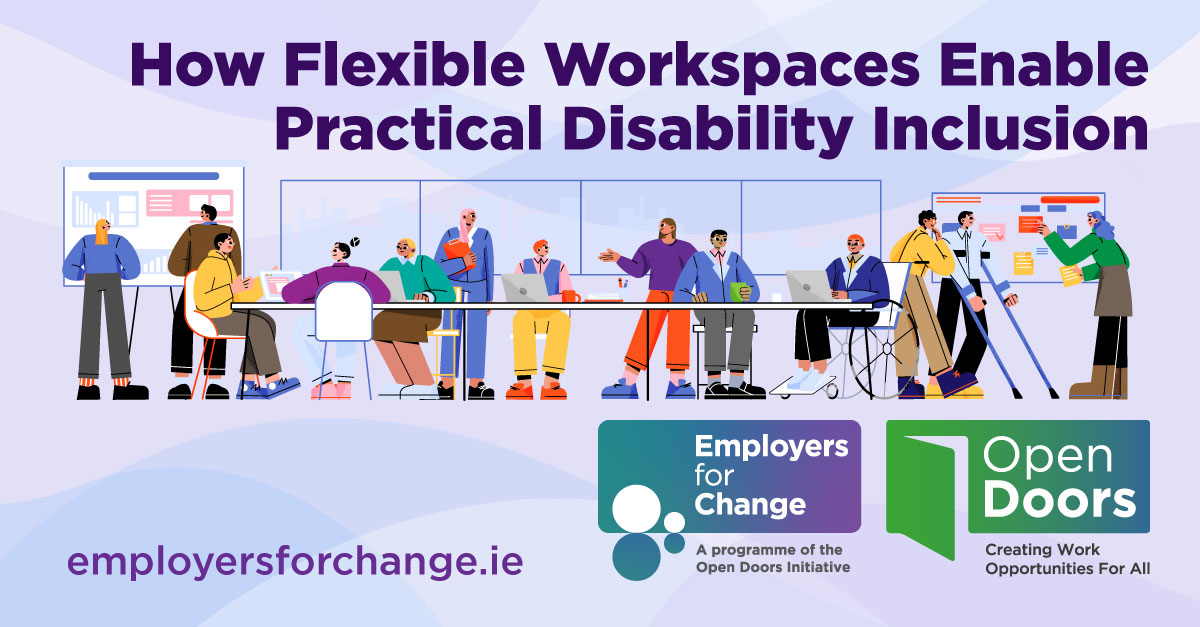
Inclusion strategies often begin with policy documents and awareness training. Yet the most immediate barrier to participation is frequently physical: the workspace itself.
A workplace determines who can enter, who can remain, and who can perform at their best. When space is rigid, inclusion becomes reactive. When space is adaptable, inclusion becomes operational.
This is where flexible workspace models can play a practical role.
This article is designed to help businesses understand the practical tips of flexible workspaces and how they enable disability inclusion.
1. The Limits of Traditional Office Models
Most conventional office spaces lock organisations into long-term decisions:
- Fixed layouts
- High fit-out costs
- Long contractual commitments
- Limited ability to reconfigure without capital spend
When an employee discloses a disability or develops a health condition, adjustments often trigger logistical and financial hurdles. Installing ramps, modifying lighting, redesigning desk layouts, or creating quiet areas becomes a facilities issue — not an inclusion priority.
The delay sends an unintended message: accessibility is exceptional, not expected.
In contrast, flexible workspaces build adaptability into the business model. This structural difference changes how quickly employers can respond.
2. Accessibility as Standard Infrastructure
In a well-designed flexible environment, many accessibility features are already in place:
- Step-free access
- Accessible toilets
- Lifts
- Height-adjustable desks
- Varied working zones
This reduces the time between disclosure and action.
Instead of asking, “How do we build this?” the conversation becomes, “How do we allocate this?”
From a compliance standpoint, this supports employers in meeting equality obligations. More importantly, it normalises accessibility. When inclusive features are visible and routine, employees are less likely to feel they are asking for special treatment.
3. Choice of Environment as Everyday Accommodation
Not all disabilities are visible, and not all support needs are structural.
Neurodivergent employees, individuals managing chronic pain, and those experiencing anxiety or fatigue often benefit from environmental control.
A flexible workspace typically includes:
- Private offices for reduced sensory load
- Quiet booths for focused work
- Informal collaboration areas
- Breakout spaces for decompression
- Bookable meeting rooms for structured discussions
This range of settings reduces the need for formal accommodation requests. Employees can select the environment that supports them on a given day.
Choice becomes a built-in accessibility tool.
4. Adapting to Changing Circumstances
Disability is not static. An employee may require:
- Remote work during treatment
- Reduced commuting during recovery
- Temporary adjustments following diagnosis
- Gradual return-to-work arrangements
Traditional leases limit how quickly organisations can respond. Space remains fixed even when needs shift. Flexible models allow employers to:
- Scale office space up or down
- Add private offices temporarily
- Shift teams between locations
- Adjust hybrid patterns without sunk fit-out costs
This protects both employee wellbeing and business continuity. Retention improves when the environment can evolve alongside the individual.
5. Location as an Inclusion Lever
Commute barriers are often underestimated.
For employees with mobility impairments, chronic fatigue, or fluctuating conditions, a long or inaccessible commute can be more limiting than the job itself.
Workspace providers with multiple locations allow teams to work closer to home. Reducing travel time from 90 minutes to 30 minutes can determine whether full-time employment is sustainable.
Inclusion, therefore, extends beyond the building entrance. It includes how someone gets there.
Practical Steps Employers Can Take
Flexible workspace providers are one route. But inclusion does not require relocation. Employers can take immediate, practical action in three areas.
1. Audit the Physical Environment
Conduct a structured walkthrough of your office. Assess:
- Entrance routes and door widths
- Lift access
- Signage clarity
- Lighting levels
- Noise exposure
- Toilet accessibility
- Desk adjustability
Where structural changes are not feasible, consider lower-cost improvements such as:
- Portable ramps
- Acoustic screens
- Task lighting
- Clear wayfinding signage
- Reservable quiet rooms
Small changes can remove disproportionate barriers.
2. Redesign Work, Not Just Space
Flexibility should extend beyond the floor plan. Practical adjustments include:
- Hybrid works as standard practice
- Flexible start and finish times
- Camera-optional meetings
- Written summaries following verbal discussions
- Clear agendas circulated in advance
- Defined quiet hours for focused work
These measures support neurodivergent staff and those managing health conditions without singling anyone out. Inclusive design works best when it benefits everyone.
3. Formalise Adjustment Processes
Flexibility should not depend on managerial discretion. Establish:
- A clear adjustment request process
- Defined response timeframes
- Manager training on disability confidence
- Centralised tracking of accommodation patterns
Consistency prevents inequity. It also builds trust.
4. Measure What Changes
Inclusion efforts should be evidence-led. Track:
- Retention rates
- Absenteeism
- Adjustment request turnaround times
- Employee engagement scores
- Exit interview themes
When flexibility correlates with improved retention or reduced absence, the commercial case strengthens.
Closing the Gap Between Policy and Experience
Inclusion strategies often fail not because of intent, but because of infrastructure. When space assumes uniformity, difference becomes disruption.
When space assumes diversity, difference becomes normal.
Flexible workspaces, whether through external providers or internal redesign, offer a practical mechanism for embedding accessibility into everyday operations.
To get more information and practical tips, Employers for Change provides expert advice and training on reasonable accommodations, disability awareness, and workplace disclosure.
Reach us on the following - Email: info@employerforchange.ie