
Fostering a Diverse Workforce
.png) Promoting diversity and inclusion has become a key pillar for businesses of all sizes. For small businesses, ensuring the inclusion of individuals with disabilities is not only a legal obligation but also an opportunity to access a broader talent pool and foster a more equitable workplace. With 22% of the population marked as having a disability in the latest Census, there is a strong chance that you already have employees who are disabled working for you. And with 70% of disabilities acquired, it could happen in the future to someone working for you now.
Promoting diversity and inclusion has become a key pillar for businesses of all sizes. For small businesses, ensuring the inclusion of individuals with disabilities is not only a legal obligation but also an opportunity to access a broader talent pool and foster a more equitable workplace. With 22% of the population marked as having a disability in the latest Census, there is a strong chance that you already have employees who are disabled working for you. And with 70% of disabilities acquired, it could happen in the future to someone working for you now.
UNDERSTANDING DISABILITY
A disability refers to any physical, sensory, intellectual or mental condition that significantly impacts a person’s ability to engage in daily activities or participate in work. In Ireland, the definition of disability is broadly interpreted under the Employment Equality Acts 1998–2015. Examples include: Disabilities can be visible, such as mobility impairments, or non-visible, which is estimated at approximately 80% and includes conditions like chronic pain, diabetes, multiple sclerosis, mental health conditions and learning disabilities, along with other conditions. Each employee’s experience with their disability is unique, and it’s essential to avoid making assumptions about an individual’s capabilities or needs.
Keeping Talent: Strategies for Retaining Employees with Disabilities
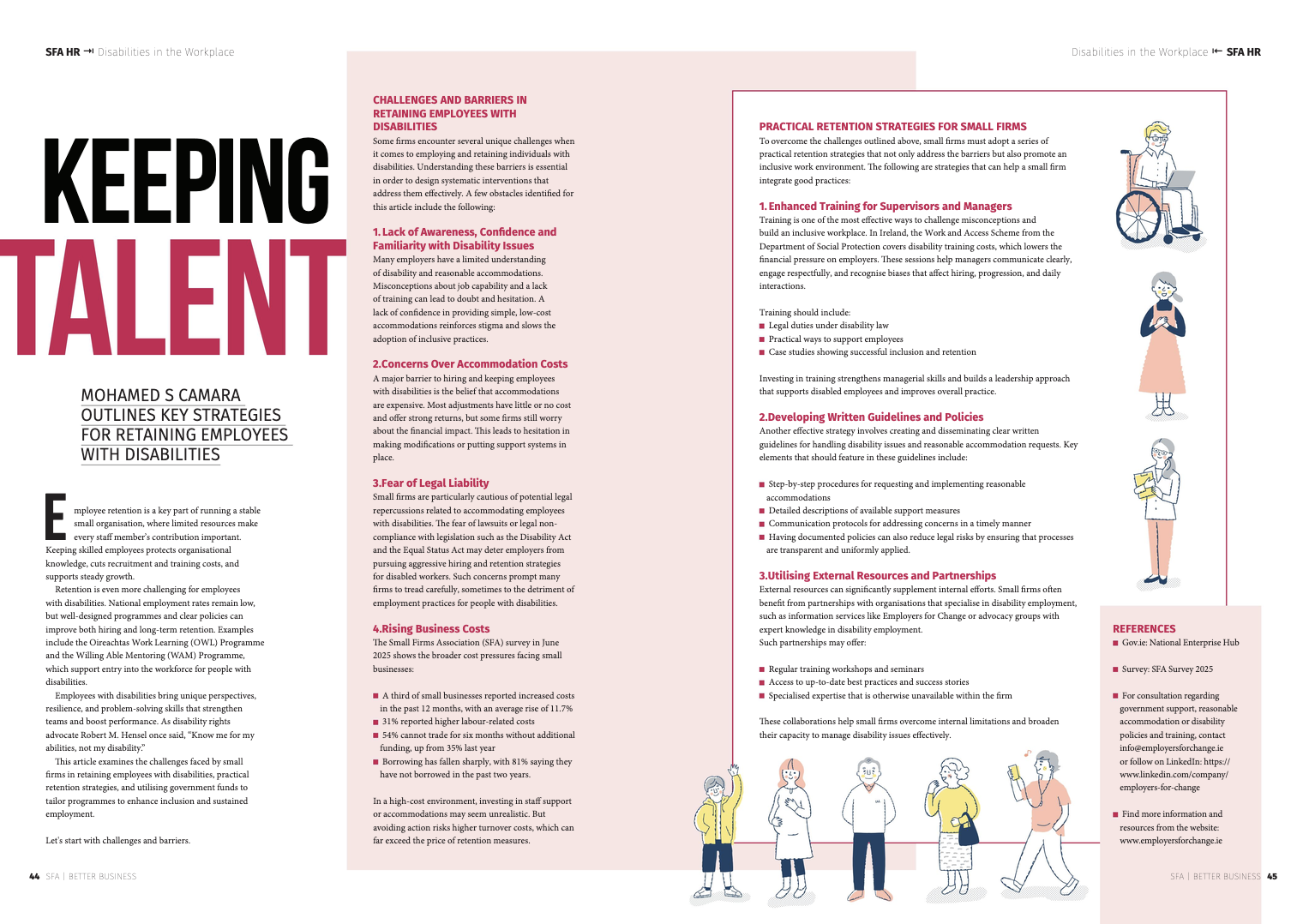 Employee retention has become a critical aspect of organisational success, particularly within small firms where resources are limited, and every employee’s contribution is highly valuable. Retaining talented employees not only preserves institutional knowledge and reduces hiring and training costs but also drives sustainable business growth.
A unique subset of this challenge is the retention of employees with disabilities. Despite low national employment rates among individuals with disabilities, careful programme design and robust policies can significantly improve both hiring and long-term retention of this talent pool. Examples of such programmes are the Oireachtas Work Learning (OWL) Programme and the Willing Able Mentoring (WAM) Programme, designed to enhance access for individuals with disabilities to the workforce.
Employees with disabilities bring unique perspectives, resilience, and problem-solving skills that strengthen teams and boost performance.
As disability rights advocate Robert M. Hensel once said, “Know me for my abilities, not my disability.”
This article examines the challenges small firms face in retaining employees with disabilities, practical retention strategies, and the utilisation of government funds to tailor programmes that enhance inclusion and sustain employment. Check the full article on the SFA website, pages 46 – 47